如何理解slot
slot 有点类似面向对象思想中的「多态」,比如要实现一个这么 Alert 组件: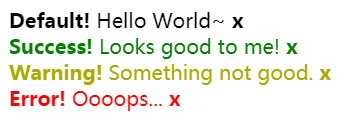
<slot> 就是外部调用时,标签中的内容。如果外部调用时没有提供内容的话,那么它就会使用自己默认提供的内容,非常方便。
使用组件:1
2
3
4
5
6
7
8
9
10
11
12
13
14<div id="app">
<alert></alert>
<alert type="success">
<strong>Success!</strong> Looks good to me!
</alert>
<alert type="warning">
<strong>Warning!</strong> Something not good.
</alert>
<alert type="error">
<strong>Error!</strong> Oooops...
</alert>
</div>
构造组件:1
2
3
4
5
6
7
8
9
10
11
12
13
14
15
16
17
18
19
20
21
22<style>
.Alert__close {
font-weight: bold;
cursor: pointer;
}
.Alert--Success {
color: green;
}
.Alert--Warning {
color: #aa0;
}
.Alert--Error {
color: red;
}
</style>
<template id="alert-template">
<div :class="alertClasses" v-show="show">
<slot><strong>Default!</strong> Hello World~</slot>
<span class="Alert__close" @click="show = false">x</span>
</div>
</template>
1 | Vue.component('alert', { |
作用域插槽
作用域插槽是一种特殊类型的插槽,用作一个 (能被传递数据的)可重用模板,来代替已经渲染好的元素。
slot-scope 用于 元素
在子组件中,只需将数据传递到插槽,就像你将 prop 传递给组件一样。
在父级中,具有特殊特性 slot-scope 的 <template>元素必须存在,表示它是作用域插槽的模板。slot-scope 的值将被用作一个临时变量名,此变量接收从子组件传递过来的 prop 对象。
1 | <div id="app"> |
1 | Vue.component('child',{ |
渲染结果: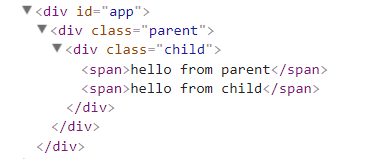
slot-scope 可用于任意元素
作用域插槽更典型的用例是在列表组件中,允许使用者自定义如何渲染列表的每一项:
1 | <div id="app"> |
1 | Vue.component('my-awesome-list',{ |
渲染结果: